



Top Graphite Iron Manufacturers and Suppliers Worldwide
Graphite Iron remains a critical material for automotive, machinery, energy, and infrastructure applications. Its strength, machinability, vibration damping, and wear resistance support components ranging from engine blocks to industrial housings. However, supplier quality can vary considerably between regions, facilities, and production batches.
John Campbell, a respected casting researcher and author, stated, “The quality of a casting is determined by the quality of the metal from which it is made.” This principle remains highly relevant when evaluating Graphite Iron manufacturers and suppliers worldwide. Reliable producers typically control melting chemistry, inoculation, nodularity, cooling rates, heat treatment, and dimensional accuracy. Their facilities should also demonstrate traceable testing, qualified engineers, and consistent compliance with customer specifications.
This overview examines leading companies across major manufacturing markets. It considers production capability, alloy knowledge, quality systems, export experience, and application expertise. Typical evidence includes tensile strength reports, hardness results, metallographic analysis, and inspection records. Certifications matter, but they do not tell the whole story.
Ask difficult questions.
A polished website is not proof of dependable castings. Some suppliers provide impressive samples but struggle with repeat orders, tight tolerances, or technical communication. That weakness deserves attention. Buyers should compare technical documents, audit production controls, and confirm whether reported performance reflects real operating conditions. Market rankings can also be imperfect because pricing, capacity, and specialization change over time. This guide therefore offers a practical starting point, not an unquestionable final judgment, for identifying trustworthy Graphite Iron partners.
What Is Graphite Iron and Why Is It Used?
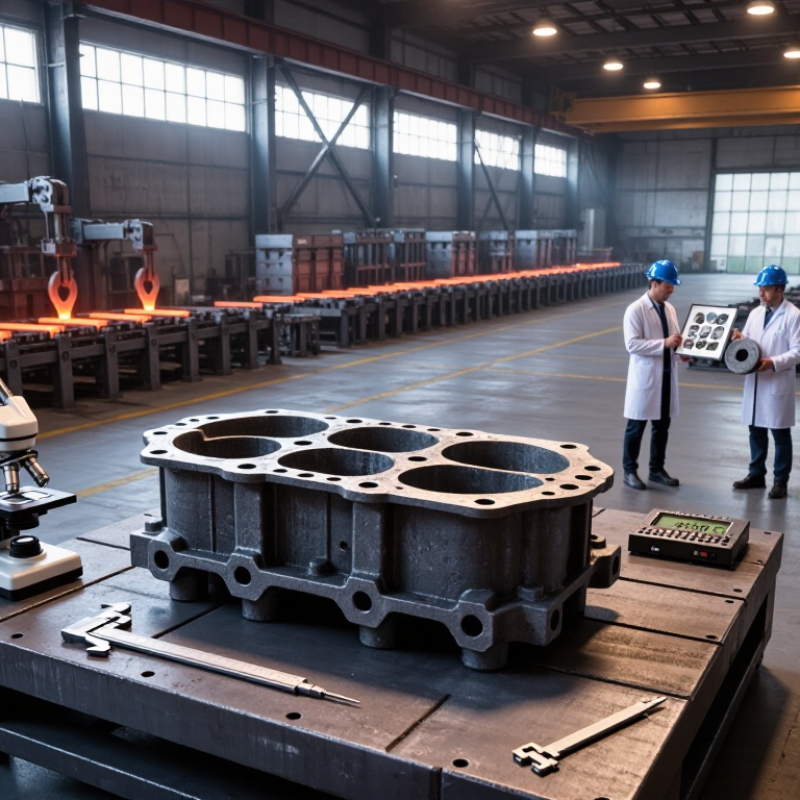
Graphite iron is cast iron whose carbon appears as graphite flakes, nodules, or compacted particles. This structure controls performance. Gray iron uses flakes, which interrupt cracks and damp vibration. Ductile iron uses rounded nodules, improving strength and impact resistance. Compacted graphite iron sits between them. It offers better thermal conductivity than ductile iron and greater strength than gray iron.
Its practical value is clear in brake rotors, pump bodies, engine blocks, housings, and heavy machinery. The 2023 World Casting Census, published by Modern Casting and the World Foundry Organization, reported about 109 million tonnes of castings worldwide in 2022. Graphite iron represents an important share of that engineering ecosystem, although public datasets do not always separate grades consistently. That limitation matters. The USGS Mineral Commodity Summaries 2025 estimated 2024 natural graphite mine production at 1.6 million metric tons. However, foundries usually create graphite through carbon control and cooling, not by simply adding mined graphite.
Tips: Match the grade to the load, temperature, and vibration. Check graphite shape, matrix structure, hardness, and tensile data. ASTM A48/A48M covers gray iron, while ASTM A536 covers ductile iron. Ask for heat-lot reports and metallographic images. A polished sample can reveal poor nodularity or unwanted carbide. Strength alone can mislead; corrosion, machining, and thermal cycling may decide service life. I would test a prototype before approving large-volume production.
Key Types and Grades of Graphite Iron
Graphite iron is not one material. Its graphite shape controls strength, damping, machinability, and heat transfer. Gray iron contains flake graphite, making it excellent for vibration control and complex castings. Common grades range from lower-strength classes for housings to higher-strength classes for machine bases. Ductile iron uses spheroidal graphite. It offers higher tensile strength and impact resistance. Grades often combine strength and elongation targets. The exact designation depends on the testing standard and section thickness.
Compacted graphite iron sits between gray and ductile iron. Its short, rounded graphite particles improve thermal fatigue resistance. Engineers often choose it for engine heads, manifolds, and heavily loaded structures. Malleable iron develops graphite nodules through heat treatment. It can provide useful toughness in smaller, detailed components. Yet grade comparisons can mislead. A high nominal tensile value may not perform well in a thin or poorly fed casting. Foundry experience, chemistry control, inoculation, and heat treatment all matter. I have seen specifications fail because hardness was treated as the only quality signal. It is not.
Tips: Match the grade to load, temperature, wear, and machining needs. Request certified tensile, hardness, and microstructure results from each supplier. Check graphite form through metallographic examination, not only a datasheet. Ask how samples represent the actual casting. This small question often reveals weak process control. Allow design reviews, because a cheaper grade can cause costly distortion or premature cracking.
Leading Graphite Iron Manufacturers by Region
Top Graphite Iron Manufacturers and Suppliers Worldwide
Graphite iron production differs by region, shaped by local foundry skills, energy costs, and customer requirements. East Asian manufacturers often provide high-volume castings for machinery, pumps, and vehicle components. Their plants commonly use automated molding lines and digital inspection systems. Consistency is a major strength.
European manufacturers usually emphasize engineering control and lower-impact production. Suppliers in Germany, Italy, and Central Europe often support complex housings, brake parts, and industrial equipment. They may offer detailed material certificates, dimensional reports, and traceability records. However, delivery times can increase when designs require several approval stages.
North American manufacturers often serve agricultural, construction, and energy equipment markets. Their experience with large castings is valuable for frames, counterweights, and heavy-duty components. Many suppliers provide machining, heat treatment, and surface finishing in one production network. That reduces handling between factories. It does not always reduce total cost.
South Asian manufacturers are becoming more competitive in standard castings and medium-volume orders. Their advantages can include flexible production and responsive engineering teams. Buyers should still verify mold quality, graphite structure, tensile strength, and surface defects. A low quotation may hide extra machining work.
Regional comparisons are not perfect. A smaller foundry can outperform a larger plant on difficult prototypes. Site audits, sample testing, and clear drawings remain essential. I have seen specifications fail because “similar grade” was treated as identical material. It is not. Good suppliers ask practical questions before quoting, especially about load cycles, wall thickness, and machining allowances.
How to Evaluate Graphite Iron Suppliers
Evaluating graphite iron suppliers requires more than comparing unit prices. Gray iron and ductile iron need different graphite structures, chemistry controls, and acceptance criteria. The World Foundry Organization’s 2023 Census reported roughly 109 million tonnes of global castings in 2022. That scale shows strong capacity, but capacity alone does not prove quality.
Ask each supplier for recent inspection records, not promotional claims. Check tensile strength, hardness, elongation, nodularity, and section thickness results. For ductile iron, compare certificates with ISO 1083:2019 requirements. For gray iron, review the relevant ASTM A48/A48M grade and test method. A useful audit follows one heat from charge materials to machining. The ladle, mould, and test coupon should tell the same story.
Request chemical analysis, furnace logs, dimensional reports, and nonconformance history. Traceability should reach the casting or batch number. The supplier should explain how it controls shrinkage, porosity, and graphite distribution. On-site audits reveal practical details, such as clean spectrometer areas and labelled sample shelves. Small details matter.
Lead time also deserves evidence. Compare quoted delivery with the supplier’s last twelve months of performance. The UNCTAD Review of Maritime Transport 2023 highlights continuing volatility in global shipping conditions, so freight assumptions need written confirmation. I would question unusually low prices. They may reflect efficient production, or simply missing inspection steps. A polished certificate is not proof. My own evaluation would include a pilot order, independent testing, and a deliberate review of what the first inspection failed to reveal.
Top Graphite Iron Manufacturers and Suppliers Worldwide – How to Evaluate Graphite Iron Suppliers
A practical way to evaluate graphite iron suppliers is to compare the mechanical properties they can consistently deliver. The chart shows the minimum tensile strength and elongation associated with selected ductile graphite iron grades under EN 1563. Buyers should also verify certification, dimensional control, chemical analysis, casting capability, inspection records, and production consistency before selecting a supplier.
Reference: EN 1563, Ductile cast irons. Actual requirements may vary according to section thickness, heat treatment, and customer specifications.
Global Applications and Market Considerations
Top Graphite Iron Manufacturers and Suppliers Worldwide
Global applications are expanding across automotive housings, pressure pipes, pumps, agricultural equipment, and renewable-energy machinery. Ductile iron combines strong tensile performance with efficient casting, but supplier quality varies sharply. The World Steel Association reported about 1.88 billion tonnes of crude steel production in 2024, reflecting a large industrial base for metal-processing demand. Graphite iron suppliers benefit from this ecosystem, especially near mature foundry clusters in Asia, Europe, and North America.
Market selection requires more than comparing price per tonne. Buyers should check graphite shape, nodularity, chemical control, tensile strength, elongation, hardness, and dimensional consistency. ISO 1083 and ASTM A536 provide useful reference points for ductile iron specifications. The International Energy Agency reported that clean-energy mineral demand continues rising, increasing interest in durable components for turbines, motors, and grid equipment. However, transport costs, energy prices, scrap availability, and regional capacity can change the final cost quickly. A low quoted price may become expensive after machining losses or delayed testing. That part deserves more attention.
Tips: Request recent laboratory reports, casting samples, traceability records, and independent inspection options. Compare delivered cost, not only the factory quotation. Ask how suppliers control magnesium treatment and inclusion defects. Small variations matter. Also review backup capacity, because one approved source may not be enough during transport disruptions. Supplier claims should be tested against measurable production records, not attractive catalog language.
Top Graphite Iron Manufacturers and Suppliers Worldwide - Global Applications and Market Considerations
Global reference table for graphite iron materials, production regions, applications, standards, and sourcing considerations
| Category | Material or Supply Segment | Typical Characteristics | Main Global Applications | Common Standards or Grades | Key Purchasing Considerations |
|---|---|---|---|---|---|
| Material family | Gray cast iron | Flake graphite structure; strong vibration damping, good machinability, and relatively high compressive strength | Machine bases, brake components, housings, pump bodies, engine blocks, and industrial equipment | ASTM A48/A48M; EN 1561; ISO 185 | Specified tensile class, section thickness, hardness, machinability, dimensional tolerance, and casting soundness |
| Material family | Ductile cast iron | Spheroidal graphite structure; higher ductility, tensile strength, and impact resistance than gray iron | Pipes, valves, automotive suspension parts, gears, pressure housings, and heavy-duty machinery | ASTM A536; EN 1563; ISO 1083 | Nodularity, matrix structure, elongation, yield strength, impact requirements, heat treatment, and pressure testing |
| Material family | Compacted graphite iron | Vermicular graphite structure; combines improved thermal conductivity with greater strength than conventional gray iron | Diesel engine blocks, cylinder heads, exhaust components, and thermally loaded powertrain parts | ASTM A842; relevant customer or national casting specifications | Graphite morphology, thermal fatigue resistance, porosity control, metallurgical consistency, and process capability |
| Material family | Austempered ductile iron | Heat-treated ductile iron with an ausferritic matrix; high strength-to-weight ratio and wear resistance | Gears, wear plates, mining components, drivetrain parts, and high-load engineering castings | ASTM A897/A897M; ISO 17804 | Austempering cycle, hardness profile, retained austenite, fatigue performance, wear testing, and distortion control |
| Supply region | East and South Asia | Broad casting capacity, extensive automotive and machinery supply chains, and strong export infrastructure | Automotive castings, industrial machinery, pumps, valves, construction equipment, and general engineering | ISO 9001-based quality systems plus ASTM, EN, ISO, JIS, or customer-specific specifications | Melt traceability, tooling ownership, export documentation, container loading, inspection support, and lead-time stability |
| Supply region | Europe | Strong emphasis on engineered castings, environmental controls, automation, and compliance with harmonized standards | Commercial vehicles, energy equipment, rail, industrial automation, hydraulics, and premium engineering applications | EN 1561, EN 1563, EN 1564, ISO 1083, and customer drawings | Carbon footprint reporting, REACH-related material documentation, recycling content, process validation, and short logistics routes |
| Supply region | North America | Established foundry base serving transportation, infrastructure, agriculture, energy, and industrial equipment markets | Water and wastewater components, agricultural machinery, engine parts, pumps, compressors, and heavy equipment | ASTM A48/A48M, ASTM A536, ASTM A897/A897M, and purchaser specifications | Domestic content requirements, qualification samples, foundry capacity, non-destructive testing, and delivery resilience |
| Supply region | Latin America | Regional production focused on infrastructure, mining, agriculture, transport, and replacement components | Pipes, pumps, agricultural equipment, mining machinery, brake parts, and general industrial castings | ASTM, ISO, EN, and local technical standards depending on the end market | Local machining capability, port access, energy availability, import duties, spare-part support, and production scalability |
| Supply region | Middle East and Africa | Demand is closely linked to water infrastructure, energy, mining, construction, and equipment maintenance | Water networks, pumps, valves, mining equipment, power generation, and construction machinery | ISO, ASTM, EN, API-related project requirements, and local procurement specifications | Corrosion protection, climate suitability, local service capability, project certification, shipping routes, and spare-parts availability |
| Quality control | Metallurgical verification | Chemical analysis, carbon equivalent control, graphite morphology examination, hardness measurement, and tensile testing | All safety-critical, pressure-containing, and fatigue-sensitive castings | Applicable ASTM, EN, ISO, or approved customer test methods | Require heat or batch certificates, test-piece location, sampling frequency, acceptance criteria, and full traceability |
| Quality control | Dimensional and casting inspection | Coordinate measurement, visual inspection, radiography, ultrasonic testing, magnetic-particle testing, or pressure testing as required | Pressure housings, hydraulic parts, rail components, structural castings, and high-value machined parts | Drawing tolerances, ISO GPS practices, ASTM/EN non-destructive testing methods, and customer inspection plans | Clarify inspection scope before order placement; inspection cost and rejection criteria can materially affect total cost |
| Market consideration | Cost and material efficiency | Total cost depends on alloy chemistry, casting yield, machining allowance, energy prices, scrap recovery, tooling, and freight | High-volume automotive and machinery programs as well as low-volume engineered replacement parts | Contract-specific commercial terms and technical acceptance requirements | Compare landed cost rather than piece price alone, including tooling amortization, machining, testing, packaging, duties, and logistics |
| Market consideration | Sustainability and supply continuity | Cast iron is highly recyclable; emissions are influenced by furnace energy, raw-material mix, yield, transport, and finishing operations | Infrastructure renewal, vehicle electrification-related equipment, industrial modernization, and circular manufacturing programs | Environmental management systems, product carbon data, recycling documentation, and applicable regional regulations | Assess recycled-metal content, energy source, environmental reporting, dual sourcing, capacity reservation, and contingency planning |