How to Choose the Best Solar Battery Box from China?
Choosing the best Solar Battery Box from China requires more than comparing factory prices. Safety, compatibility, traceability, and long-term service matter equally.
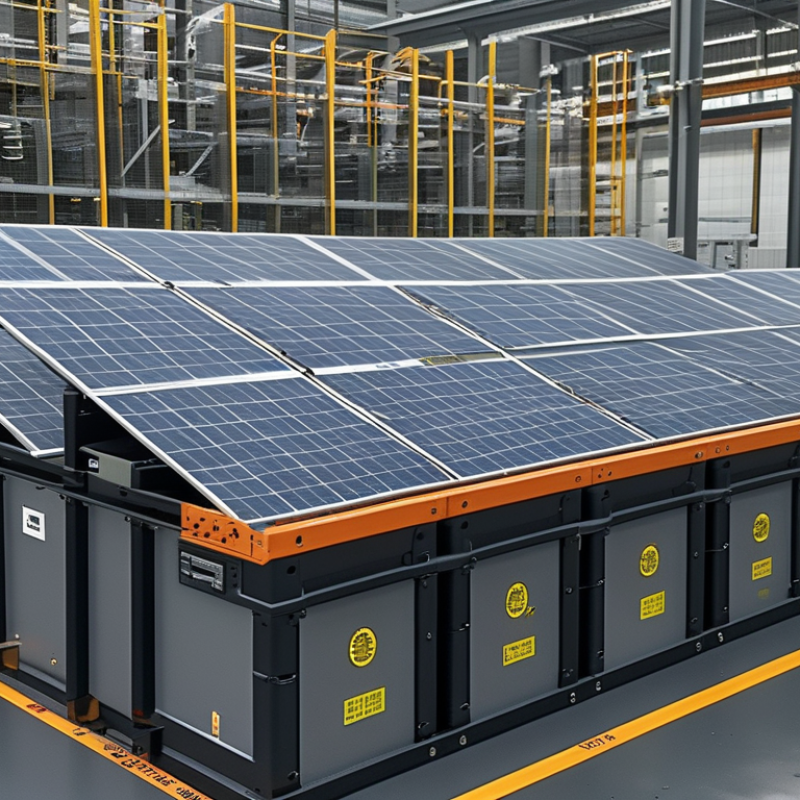
The International Energy Agency reported that global battery storage additions reached about 42 GW in 2023. This represented more than double the previous year’s growth. Its Batteries and Secure Energy Transitions report also identifies China as the leading battery manufacturing center. That scale creates opportunities, but it also creates inconsistent quality. Fatih Birol, Executive Director of the IEA, stated, “There is no clean energy transition without batteries.” The box protects that transition at ground level. It must shield cells, cables, and control components from heat, dust, moisture, and impact.
A reliable Chinese supplier should provide clear enclosure dimensions, material specifications, ingress-protection test results, thermal data, and production records. Check whether the box fits your battery model precisely. A few millimeters can affect ventilation, cable bending, and maintenance access. Look for practical details, such as reinforced corners, corrosion-resistant coatings, fire-resistant materials, and secure locking points. Certifications should be verified through original documents, not attractive website badges.
A perfect checklist does not exist. Real installations are less tidy. Humidity, uneven mounting, shipping damage, and unclear after-sales support can expose weak suppliers quickly. Request samples, inspect welds, review quality-control procedures, and confirm warranty responsibilities before placing a large order. The cheapest Solar Battery Box may save money today. It may also create expensive problems later. This guide evaluates Chinese manufacturers through evidence, engineering fit, and dependable communication.
Define Your Solar Battery Box Requirements and Usage Conditions
Before choosing a solar battery box from China, define the actual working conditions. Start with daily energy use, backup duration, peak loads, and charging sources. A 10 kWh battery may not support a 5 kW pump for two hours. Conversion losses and reserve capacity also reduce usable energy.
The International Energy Agency reported that battery storage deployment more than doubled in 2023. This growth makes requirement accuracy increasingly important. Record the battery chemistry, nominal voltage, continuous current, peak current, and expected cycle frequency. For outdoor installation, specify the enclosure’s ingress protection, corrosion resistance, cable entry design, and operating temperature. Dusty workshops and humid coastal sites need different protection levels. Indoor installations may require ventilation, clearance, and thermal monitoring.
A practical specification should include dimensions, mounting method, maintenance access, communication ports, and emergency isolation. Ask Chinese suppliers for material certificates, temperature test records, ingress test reports, and traceable quality-control documents. The National Renewable Energy Laboratory notes that temperature strongly affects lithium-ion battery performance and aging. Therefore, confirm heat dissipation before selecting a compact box. It is tempting to choose the lowest quotation. That decision often ignores installation labor and replacement risk. My own checklist is useful, but not perfect; actual site measurements can still expose missing details.
How to Choose the Best Solar Battery Box from China?
Define Your Solar Battery Box Requirements and Usage Conditions
The enclosure IP rating is a key requirement when selecting a solar battery box. Under IEC 60529, the first digit indicates protection against solid particles and the second digit indicates protection against water. Higher ratings generally provide better protection, but the battery voltage, continuous current, dimensions, ventilation, temperature range, and installation method must also be verified.
IP54 is commonly suitable for sheltered locations, while IP65 or IP66 is more appropriate for outdoor installations exposed to dust and water jets. IP67 provides temporary protection against immersion, but it does not automatically guarantee resistance to condensation, chemicals, UV exposure, or long-term outdoor aging.
Compare Battery Box Types, Materials, and Protection Features
Choosing a solar battery box from China starts with matching the enclosure to the installation, not its appearance. Indoor wall-mounted boxes suit dry utility rooms and smaller systems. Outdoor floor cabinets offer more space for modular batteries, fuses, and cooling equipment. Rack-style boxes are practical for commercial projects, but they need stronger floors and careful cable routing.
Material changes performance. Powder-coated steel resists impact and usually costs less. Aluminum reduces weight and handles outdoor corrosion better. ABS or polycarbonate can provide electrical insulation, yet plastic may age faster under strong sunlight. The IEA’s Renewables 2024 report states that global battery storage additions more than doubled in 2023. This growth makes material traceability and production consistency increasingly important. Ask the Chinese supplier for material grades, coating thickness, and batch inspection records.
Protection features deserve closer attention. An IP65 rating can block dust and water jets, but it does not guarantee protection against flooding or condensation. Check compliance with IEC 60529, door-gasket quality, drainage design, and cable-gland sealing. Look for short-circuit protection, temperature sensors, a battery management interface, and clear separation between power and control wiring. UL 9540A evaluates thermal runaway and fire propagation behavior; it is not simply a box certification. NREL’s 2024 Annual Technology Baseline also shows that lithium-ion systems remain sensitive to thermal management and installation conditions. Higher protection is not automatically better. A sealed cabinet without heat removal may trap heat. No box solves every site problem.
Check Battery Compatibility, Capacity, and Electrical Specifications
Choosing a solar battery box from China starts with compatibility, not appearance. Match the battery chemistry, nominal voltage, inverter voltage range, and communication protocol. Lithium iron phosphate batteries often require CAN or RS485 communication with the inverter. A physical connection may still fail without correct firmware or pin settings. Ask for a wiring diagram, protocol sheet, protection limits, and a sample test report.
Capacity needs careful calculation. Measure daily energy use, then include conversion losses and reserve capacity. For a 5 kWh daily load, a 6.7 kWh nominal battery may be more realistic after allowing 90% usable capacity and system losses. NREL’s 2024 photovoltaic and storage benchmark uses roughly 85% round-trip efficiency for battery systems. That figure reminds buyers that stored energy is never fully recovered. Oversizing is possible, but it increases cost and idle losses.
Check continuous power separately from peak power. A battery may advertise 10 kW peak output but support only 5 kW continuously. Compare maximum charge current, discharge current, operating temperature, enclosure rating, and cycle-life testing conditions. The IEA’s Batteries and Secure Energy Transitions 2024 reports that utility-scale battery additions reached about 42 GW in 2023, showing rapid market growth. Yet fast growth does not guarantee equal quality. Request IEC 62619 testing, UN 38.3 transport documentation, and independent capacity results. I would also test communication under low-temperature conditions. That step is easy to overlook.